

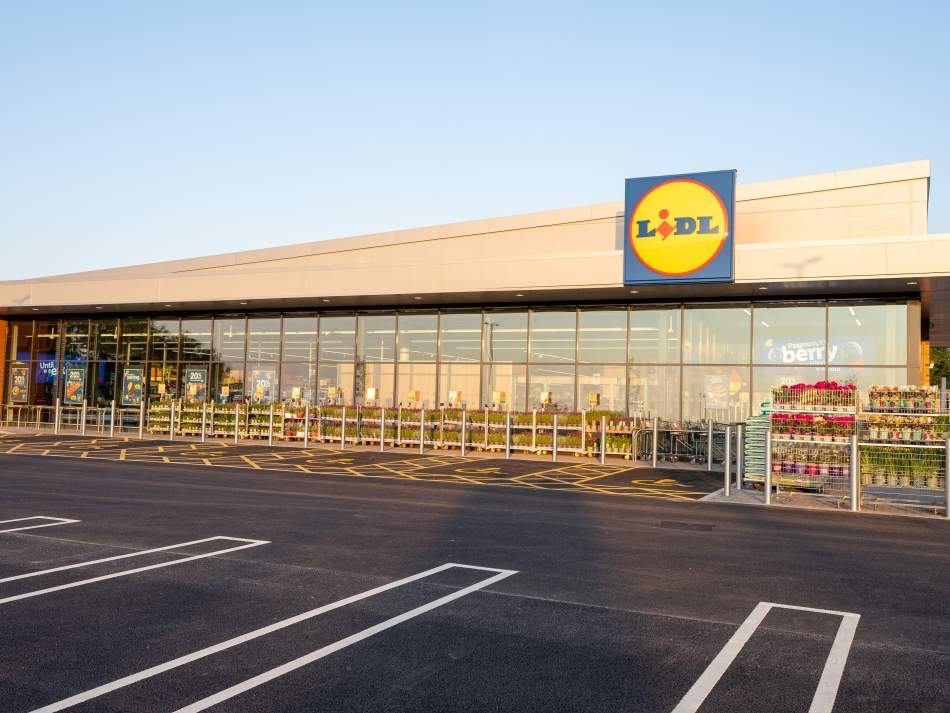
Lidl is strengthening its commitment to sustainable mobility in the UK, announcing a £10 million investment this financial year to expand its network of electric vehicle charging stations.
The program includes the installation of approximately 100 new rapid charging stations at existing supermarkets, with particular attention to those stores that do not currently have this service.
The investment comes on top of the £25 million the discount retailer has invested in its charging infrastructure since 2017, which has enabled around a third of Lidl supermarkets in the UK to be equipped with rapid charging stations.
Expansion will continue through this year's planned new openings, as the brand intends to install fast-charging systems in most of its upcoming stores, bringing the service directly to local communities.
Alongside the network upgrade, Lidl has announced a reduction in the tariff reserved for members of the Lidl Plus loyalty programme, which will go from 62 to 59 pence per kilowatt hour.
For those who don't use the app, fast charging will instead be offered at a price of 74 pence per kilowatt hour.
According to the company's estimates, comparing the Lidl Plus tariff with a market average of 80 pence per kilowatt hour, motorists could save around £4,41 per session, up to an annual benefit of £529.
The move comes amid strong growth in British electric mobility: according to data from the Society of Motor Manufacturers and Traders cited by the company, the number of fully electric cars on UK roads has tripled since the end of 2022, exceeding 2,1 million vehicles.
However, the increase in the number of vehicles on the road has not yet been matched by sufficient development of public infrastructure, since a report by the Department of Transport shows that 47% of electric motorists believe the number of available charging stations is inadequate.
Furthermore, 24% of users say they are dissatisfied with the coverage offered in their area, highlighting the need to make charging points more widespread, accessible, and integrated into the places they frequent daily.
Unlike many other large-scale retail operators, which outsource the service, Lidl directly owns its own stations, a model that allows the company to maintain control of the infrastructure and tariffs.
This move also allowed Lidl to become the first British supermarket chain to integrate top-up payments directly into its loyalty app, through the “Power up with Lidl Plus” service.
Over the past year, charging stations at Lidl GB supermarkets have provided enough energy to travel a total of 49,1 million miles – a distance equivalent, according to the group, to one hundred return trips between the Earth and the Moon.
Using the network would also have resulted in a net saving of approximately 10.600 tons of carbon dioxide, contributing to the discount retailer's environmental goals and the spread of more sustainable modes of transport.
“For over 30 years, we have focused on offering customers the best possible value for money when shopping, and our electric vehicle network is an extension of this promise,” said Richard Taylor, chief real estate officer at Lidl GB.
“By expanding the availability of rapid charging stations, we are making charging while shopping as easy and affordable as possible, helping drivers save money and supporting more sustainable everyday behaviors,” added Taylor.
Present in Great Britain since 1994, Lidl GB is now the fifth largest supermarket chain in the country and has over 35 employees, more than 1.010 stores and 13 distribution centres across England, Scotland and Wales.
Internationally, Lidl is part of the Schwarz Group and operates in 32 countries with approximately 13 supermarkets, over 230 logistics centers, and more than 395 employees. In the 2025 financial year, the group achieved revenues of 185,6 billion euros.