

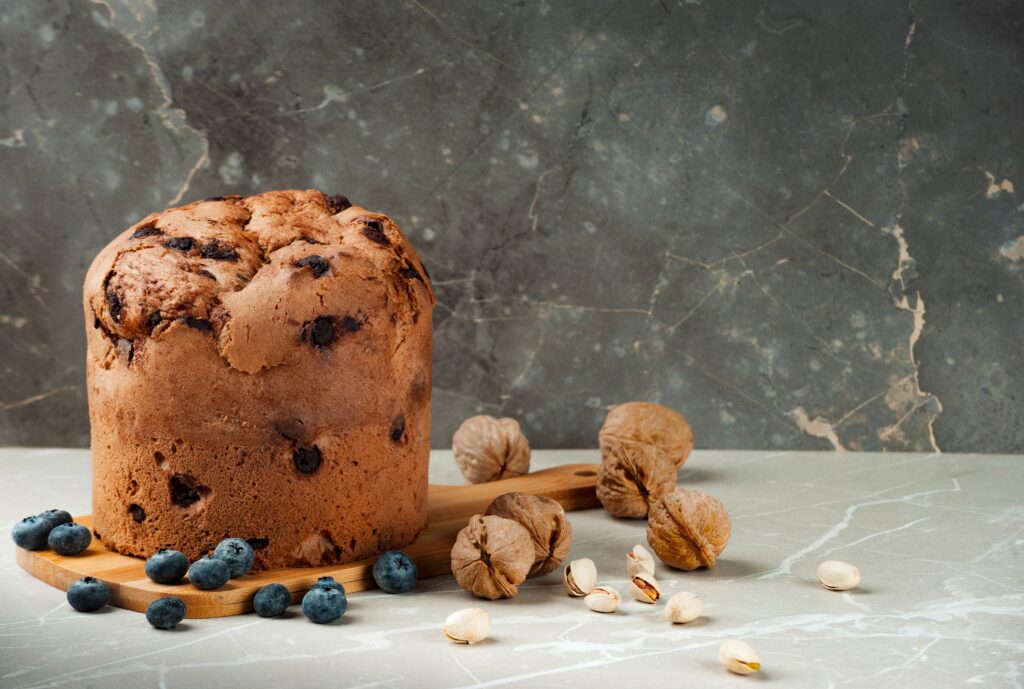
Panettone is conquering international markets, but its growing popularity outside of Italy raises questions about the protection of traditional recipes and the origin of raw materials. Among the most representative traditional Italian holiday desserts, panettone is today the protagonist of a global market that has surpassed the 2 billion euros, while over 60% of the products are manufactured and consumed abroad, often with ingredients and processing techniques different from those of the Italian tradition. International production has reached 350 thousand tons per year, supported by the spread of industrial plants that, in several countries, use chemical leavening agents instead of sourdough and vegetable fats instead of butter.
In this scenario, Italy exports approximately every year 13.500 tons of panettone, worth 500 million euros, but it faces international competition that places the question of product authenticity at the center. To strengthen protection of this great leavened product, the Academy of Masters of Sourdough and Italian Panettone has promoted a proposal to update the Ministerial Decree of July 22, 2005, which regulates the production characteristics of panettone.
The initiative was presented in Rome, at the Palazzo delle Esposizioni, as part of the fifth World Convention “The King of Leavened Products”, organized by the Academy in collaboration with AEPI, the Confederation of European Associations of Professionals and Businesses. At the heart of the event is a Manifesto to promote the connection between panettone and the national agri-food supply chain, through the introduction of the phrase “Italian Panettone – 100% Agricultural Supply Chain”.
The proposal aims to guarantee the Italian origin of ingredients, from flour to butter, from eggs to candied fruit, through digital traceability systems capable of documenting the provenance of raw materials. The goal is to distinguish products tied to the national territory from those produced abroad, strengthening product recognition and offering greater guarantees to consumers.
The discussion was attended by representatives of institutions, agricultural organizations, and the business community, including Giorgio Salvitti, advisor to the Minister of Agriculture, Undersecretary Alessandro Morelli, Undersecretary Fausta Bergamotto, AEPI President Mino Dinoi, and Academy President Claudio Gatti. Among the topics discussed was the relationship between industry, craftsmanship, and agriculture, with the participation of representatives of the Italian pastry industry and major agricultural associations.
Particular attention has also been paid to internationalization, with the contribution of SIMEST, Unioncamere, ICE, and representatives of major European trade fairs, including HostMilano, Italian Exhibition Group, Sirha, and Koelnmesse Italia. The aim is to identify new promotional tools to support Italian companies in foreign markets and enhance a production that represents an important economic and cultural asset.
The challenge, therefore, is to combine panettone's international growth with the preservation of its identity, strengthening the role of Italian agriculture and food processing companies. This perspective sees the protection of raw materials and the recognition of traditional processes as key elements in upholding the value of Made in Italy.