

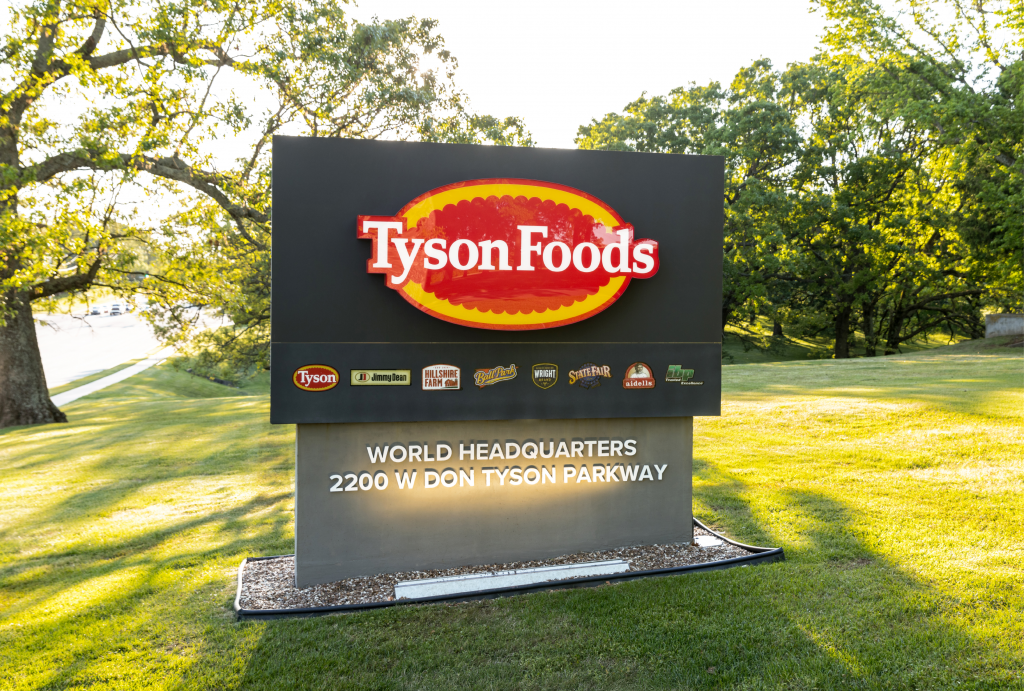
Tyson Foods has cut its 2026 profit forecast for the second time in a month, citing the U.S. cattle shortage, price volatility, and increased consumer caution. The challenges continue to be concentrated primarily in the beef division, where rising cattle purchasing costs have more than offset the benefits of record-high meat prices.
The U.S. group now expects adjusted operating profit between $1,85 billion and $2,05 billion, below the previous guidance of $2,1 billion to $2,3 billion announced in early August. Revenue growth estimates have also been lowered, expected to be between 1,5% and 2%, from the previous range of 2,5% to 3,5%.
According to Tyson, the revision reflects significant margin compression, driven by volatile stock prices and one of the most severe cattle shortages ever recorded in the United States. The company also noted the expected impact of declining cattle prices on the value of previously purchased livestock inventories.
The new guidance prompted a sharp reaction on Wall Street, where Tyson shares fell about 7%, while shares of Smithfield Foods and Pilgrim's Pride fell about 2%. The U.S. beef industry has long been in a critical phase, after a persistent drought in the western regions of the country damaged pastures and forced many ranchers to reduce their herds.
The suspension of beef imports from Mexico, ordered to prevent the entry of a dangerous livestock parasite into the United States, also contributed to further compressing supply. Trade with Mexico has only recently resumed, and to a limited extent, but has so far failed to fully rebalance the market.
In July, the average price of lean and extra-lean ground beef reached $8,41 per pound, marking a 38% increase from five years earlier. The issue has also become political, with the Trump administration trying to contain price increases before the November midterm elections.
The president signed a measure aimed at increasing U.S. imports of ground beef, while the Department of Justice is investigating the causes of high consumer prices. The announced measures have helped reduce beef prices, but have sparked protests from ranchers and impacted the value of stocks held by processing companies.
In response to the crisis, Tyson launched a vast streamlining plan, including plant closures and thousands of job cuts. Over the course of the year, the group closed a large beef processing plant in Nebraska and scaled back operations at another facility in Texas. In August, the company also announced its intention to close or sell three other meat processing and packaging facilities.
According to CEO Donnie King, these initiatives should begin to ease cost pressures as the company enters fiscal 2027. Analysts, however, believe the new forecast cut confirms more challenging conditions than expected in the short term, despite the capacity improvements. Finally, supply-side challenges are compounded by weak demand, as high prices and pressure on household budgets are making consumers more selective.
Tyson specifically noted increased caution in discretionary spending and a more challenging consumer environment in restaurants and other foodservice channels. Lower-income families are tending to opt for less expensive alternatives, private label products, and more convenient options. The combination of beef shortages, high costs, price fluctuations, and cautious consumption will therefore continue to weigh on the group's profitability at least through the end of fiscal 2026.