

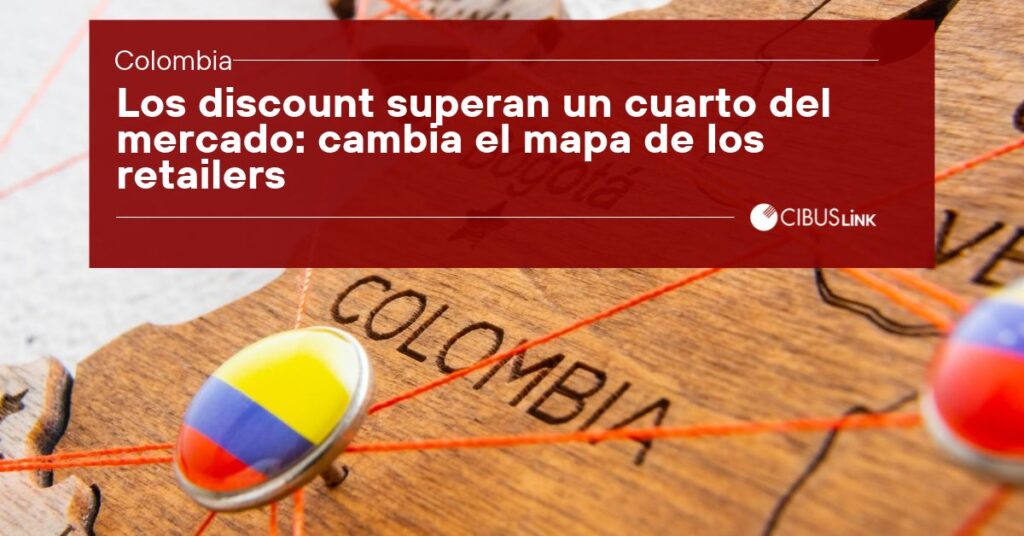
According to NielsenIQ, D1, Ara and Ísimo concentrate more than 24% of the minority groups. Exit and Olimpica pierden participation. The Colombian model marks the path in the region.
Colombia is now the most advanced hard discount laboratory in Latin America. The data from NielsenIQ published on September 24, corresponding to the 2026 accumulation, show that the three main hard discount divisions (D1, Tiendas Ara and Ísimo) represent more than 24% of the twenty minority groups in the country. The total market is 94,18 billion pesos (US$28.900 million), with an increase of 11,2%.
Food Retail Italia, the group that connects Italian industrial production with large retailers in Latin America, continues to seek this transformation. The figures are blunt. D1, controlled by the Santo Domingo family, has a 14,12% share: 0,26 points more in one year and 2,65 points more from 2022. Tiendas Ara, from the Portuguese group Jerónimo Martins, has 9,42%, with sales of 8,87 billion pesos (one US$2.700 million) and a growth of 21,2%. This one, from the Olímpica Group, is still small, with 0,55% of participation, but it is the one that grows the most: +55,9%.
In the same period, the traditional cadenas are relegated. Almacenes Éxito grows 8,1%, due to the market, and drops to 6,75% of participation. Olimpica only grew 0,7% and lost 0,39 points, up to 3,71%. The traditional channel of neighborhood ties still retains 42,2% of the market, but loses 0,15 points.
The Colombian model, based on a few high rotation products, a strong presence of its own brand and low prices every day, is linking to other countries. In Chile, Cencosud launched the Don Salva line and SMU is buying the Ahorra line. In Peru, Intercorp drives Mass. In Mexico, Tiendas 3B and Bodega Aurrera have been the most popular formats ever since.
The discount is not a phenomenon of any kind, you have to choose between competing with its own format, such as Olímpica with Ísimo, or differing in freshness, service and premium products.
There are also consequences for the industry: the discount store buys few products but in large volumes, and requires the ability to manufacture its own brand, stable costs and constant supply, it is converted into a channel that you can wait for with a dedicated offer.