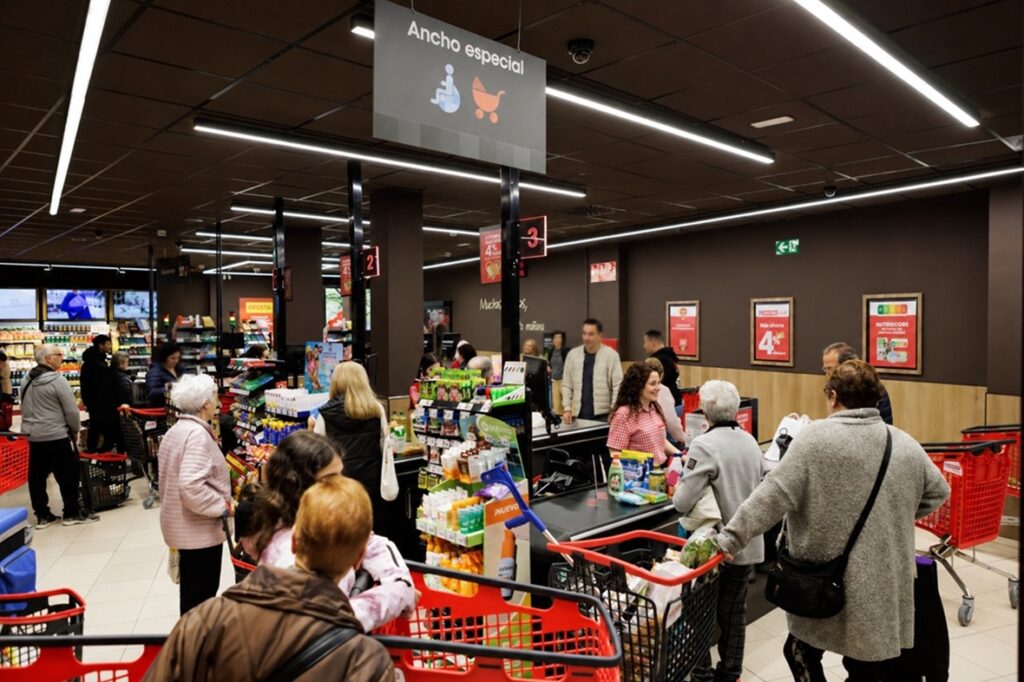
Eroski closed the first half of the 2026 fiscal year with growing sales and improved earnings, supported by a strategy focusing on convenience, private label, and loyalty. The Spanish cooperative group recorded gross sales of €3,061 billion, up 3,8% compared to the same period of the previous year, while profit rose to €65,4 million, compared to €55,5 million in the first half of 2025.
The data covers the period between February 1st and July 31st and depicts a favorable trend in a market where families continue to pay close attention to price. According to the group, moderate food price inflation is accompanied by higher operating costs, especially for transportation and energy, which make it more challenging to maintain a competitive offering.
In this scenario, private label products confirm their importance in food distribution: Eroski-branded products represent 36,6% of the group's food sales. They are a key component of the commercial offering, complementing producer brands and local products to meet diverse spending and consumption needs.
The group places a significant role in its own brand in balancing quality and price and supporting customer purchasing power. At the same time, it maintains a focus on local products and strong relationships with local suppliers, elements that characterize the cooperative model and its connection to the agri-food sector of the areas in which it operates.
Loyalty also plays a significant role in the results: purchases made by members of the dedicated program account for 69,7% of total sales. This data highlights the importance of the program's participating customers and the personalized initiatives developed by the group to strengthen the continuity of the relationship with consumers.
Growth affected all retail formats, from directly operated supermarkets to franchised outlets, hypermarkets, and cash & carry stores. During the first half of 2019, Eroski continued to modernize its network, as part of a strategic plan aimed at improving competitiveness and supporting profitable growth by enhancing the shopping experience in stores and through digital channels.
Sales per square meter increased by 3,9%, a metric the group attributes to improved store productivity and a more efficient use of retail space. This result is in line with efforts to update the network and strengthen operational efficiency.
On the financial front, the net debt-to-EBITDA ratio has decreased to 2x. This more balanced structure, according to Eroski, increases the group's ability to support investments in growth, innovation, and modernization. The group also reports a solid liquidity position and diversified funding sources.
For CEO Rosa Carabel, the results confirm the resilience of the cooperative model and consumer confidence in a still demanding environment. The direction indicated remains that of combining savings, quality, choice, and proximity to the local community, while financial strengthening must accompany the implementation of the strategic plan.