
Unilever closed 2025 with underlying sales (USG) growth of 3,5%, supported by an acceleration in the fourth quarter, which, at +4,2%, exceeded market expectations and consolidated the group's operational strengthening. Annual revenue amounted to €50,5 billion, down 3,8% on a reported basis, a figure impacted by exchange rate effects and divestments, while organic sales momentum remains positive, especially in emerging markets.
India, Indonesia, and China remain the main growth drivers, partially offsetting the slowdown in mature economies, where consumption remains weaker and more selective. In the fourth quarter, North America recorded growth of 2,8%, slowing compared to previous periods, while Europe remained essentially flat at +0,1%, signaling continued cautious demand and strong competitive pressure.
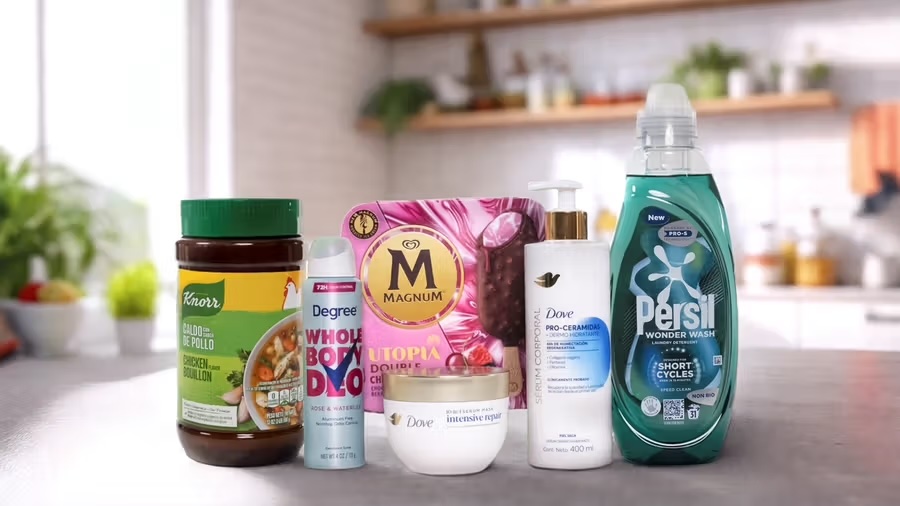
From a profit perspective, the underlying operating margin rose to 20,0%, thanks to rigorous cost discipline and a productivity program that generated savings of approximately €670 million by the end of the year. A key role was played by the so-called "Power Brands," which account for 78% of revenue and achieved 4,3% sales growth, confirming the effectiveness of the strategy of focusing on the most scalable and highly profitable assets.
The organizational transformation, geared toward a leaner structure and faster decision-making processes, was accompanied by the completion of the spin-off of the Ice Cream division, a move that reshaped the group's industrial scope. According to CEO Fernando Fernandez, 2025 marked a turning point toward a more focused model, with clear priorities on innovation, premiumization, and strengthening omnichannel execution.
For 2026, guidance indicates growth in the low end of the 4-6% range, with underlying volumes expected to increase by at least 2% and a further, albeit moderate, improvement in operating margin compared to the 20% achieved in 2025. This caution reflects the structural slowdown in developed markets, where price elasticity remains high and promotional pressure continues to impact mix dynamics.
Strategically, the group intends to build a portfolio increasingly focused on Beauty, Wellness, and Personal Care, prioritizing premium segments and digital channels, with a particular focus on the United States and India as key markets for future growth. For the supply chain and distribution partners, the outlined trajectory entails strengthening collaborations on category innovation, mix management, and the development of high-margin channels.
On the financial front, Unilever announced a new €1,5 billion buyback program and a 3% increase in its quarterly dividend compared to the third quarter of 2025, confirming its commitment to maintaining a balance between investment and shareholder remuneration. Despite the market's initial negative reaction, with the stock falling 1% in early trading, management reaffirmed its confidence in the group's ability to generate sustainable growth even in a less expansionary macroeconomic environment.