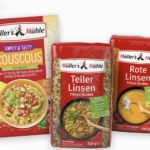


German inflation is returning to relatively stable territory. According to preliminary estimates from Destatis, the consumer price index (CPI) will rise 2,3% year-on-year in November 2025, the same rate as in October. On a monthly basis, however, prices are down 0,2%, confirming a progressive cooling trend. For the agri-food sector, a significant signal is coming: food prices food slow down again, going down to + 1,2 % on an annual basis after 1,3% in October and +2,1% in September.
The result is particularly significant for the food industry, large-scale retail trade, and agricultural supply chains exporting to Germany, Europe's leading market by volume. The cooling of shelf prices indicates more selective demand and increased competitive pressure, especially for high-volume products.
The dynamics of beni overall it is moderate (+1,1%), while the services remain the main driver of inflation (+3,5%), reflecting the higher costs of urban logistics, transport and labour, all elements that also indirectly impact the agri-food value chain.
On the energy front, the contraction eases: energy goes from -0,9% to -0,1%, signaling a possible turning point in the coming months. A structural rise in energy costs would have immediate effects on processing, refrigeration, packaging, and distribution.
The harmonized index HICP, the reference for European monetary policy, grows by + 2,6 % on an annual basis and down 0,5% month over month. The difference compared to the CPI is due to different methodologies and weightings, but the overall trend confirms that price dynamics are under control.
To better stylise the inflationary profile, Destatis recalls that core inflation – excluding food and energy – remains higher than + 2,7 %, a sign that the cost of services will continue to impact the entire economy. Consumers can use a personal inflation calculator to assess the impact of rising food prices on their individual spending habits.
The final data will be published on December 12, but the preliminary picture shows Germany in the process of normalizing, with a finally lighter shopping basket: a key factor for the European agri-food sector, which is called upon to balance competitiveness and margins in a context of weak growth.