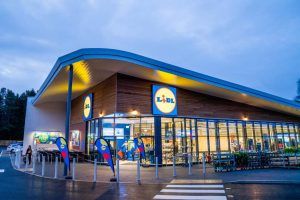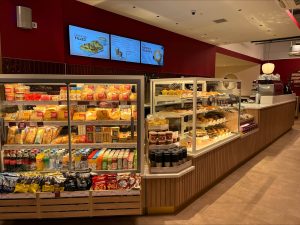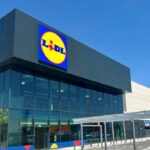


Retail theft doesn't make as much headlines as an €88 million Louvre heist, but it's now a strategic cost factor in the German market. And operators like Lidl are responding systematically. In numerous branches, the discounter is now applying the yellow "Gesicherter Artikel" sticker to a growing number of products: energy drinks, snack wafers, aged cheeses, premium coffee, XXL shampoo, 500g beef cuts, and salmon. The spiral antenna, visible when held up to the light, indicates the use of RF/RFID technologies, which for years were considered too expensive for mass consumption.
The situation has changed. The costs for tags and labeling have dropped to a few cents, while the shoplifting increase in parallel with the transformation of the boxes. self-service checkouts are now consolidated: according to the latest EHI survey, in addition 11.000 German outlets have them; more than 6.240 are in the large-scale German food distribution, with an average of 3,98 self-service checkouts per storeLidl is among the main drivers and is restructuring its checkout area on a large scale, defining self-scanning as a fully equivalent shopping method.
However, increased automation means greater exposure to theft. This is why the sector now combines multiple layers of protection: exit barriers, AI-enabled video monitoring, dedicated staff, and, increasingly, RFID. Tags allow for deactivation at the checkout and provide more reliable detection than traditional acoustic-magnetic systems. The economic principle is straightforward: it's better to invest in prevention than to account for repeated losses.
Lidl doesn't go into detail and refers to "sector-specific measures, applied selectively." But the extent of the labeling is evident even in stores not classified as hot spots. The affected categories point to a specific objective: to combat organized theft, which focuses on compact, expensive, and easily re-sold products.
For now, the technology seems to be limited to the basic version: tags are automatically deactivated upon scanning. The advanced feature—that is, automatic identification upon self-service checkouts Without a single swipe over the reader, as has been done for years by Uniqlo and Decathlon—it's not yet implemented, but it would already be technically feasible. RFID allows an item's price, type, and serial number to be read in fractions of a second.
Looking ahead, many analysts hypothesize a two-tier model: High-risk items equipped with full RFID and automatic recognition and Standard assortment still managed through manual scanning. Overseas, Walmart uses RFID to monitor freshness in its serviced departments, confirming how the technology can support not only safety but also operational quality.
Today the yellow sticker in German discount stores may seem like a minor detail. But with the rapid spread of self-service checkoutsRFID technology risks becoming, within a few years, a structural component of the discount model. The logic is simple: technology becomes established when it reduces real costs. And in large-scale German food distribution, in-store thefts They are exactly that — a growing cost that is increasingly difficult to ignore.