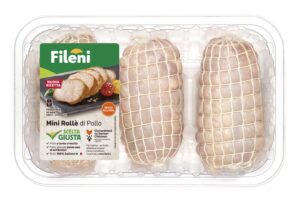

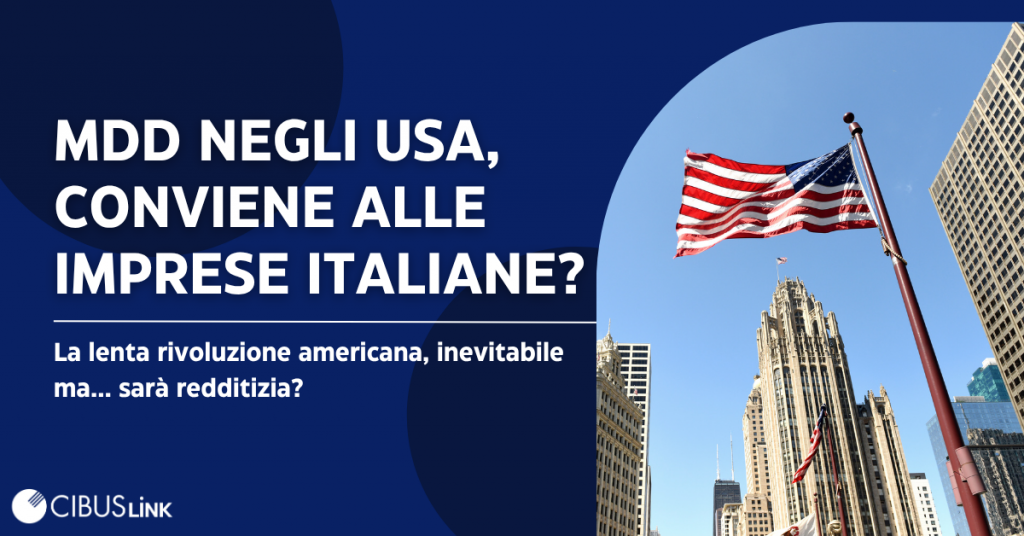
In United States A silent but powerful transformation is underway, which is touching the heart of the food industry: the distributor's brandIn the country that more than any other has built its consumer identity around the power of industrial brands—the home of huge advertising budgets, modern marketing, and an almost emotional loyalty to brands—a new competitive era is dawning. And it's a phase that, like it or not, is increasingly beginning to resemble Europe.
The crucial question then becomes another: how much Is the American market really ready to welcome the private label revolution?
The United States has historically been a paradise for industrial brands. The very concept of branded goodThis is where the consumer goods industry was born, founded on mass marketing, repetition, recognition, and aspiration. In this context, penetrating with a private label has always been extremely difficult. Yet today, the market is showing some unmistakable signs: Private label sales in the US are growing faster than those of industrial brands: +4,2% in the last 52 weeks (source: NielsenIQ). Industrial brands grow much less: +1,1% in the same period. The gap with Europe remains enormous: in Western Europe the private label is worth 39% of total sales, more than 20 points more than in the USA.
America remains far from European standards, but it is demonstrating a trend that cannot be ignored: private labels are conquering the shelves and the imagination of consumers. Walmart It has always been the icon of US distribution, and its commercial power is gigantic, even if often overestimated: the overall retail market share is approximately 6%But in the grocery sector, its weight is much greater, and above all, it is the retailer that most influences competitive models.
Its private labels — especially Great Value and the new premium line Bettergoods —they now have a strategic role: Walmart's private labels are worth about 30% of its sales overall (source: TalkBusiness, 2025). In many food categories they exceed 25% of units soldPrivate label becomes a negotiating tool with industrial brands: if the supplier doesn't lower the asking price, Walmart pushes its brand.
The strength of industrial supply remains immense, and America remains the country where consumers trust brands more than retailers. But the growth of private labels is now structural, inevitable.
Aldi and Lidl: The European Revolution Meets American Obstacles
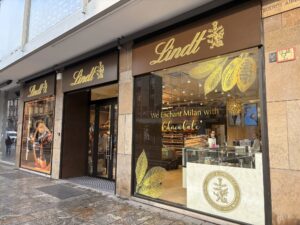
The arrival and expansion of Aldi and Lidl—the true architects of the success of private label retail in Europe—represent the most obvious element of discontinuity. Aldi will open over 200 new stores in 2025 and aims to open 800 stores in 5 years. Aldi's private label assortment is approximately 90%. Lidl operates with private labels at80 % and is growing in the New York, Washington and Atlanta areas.
However, there is one huge obstacle that Europe did not have: tariffs on food imports.
To bring European products to the US, especially in the Trump 2.0 era, costs increase and positioning becomes complicated. Aldi and Lidl must therefore choose whether to import by paying high duties, losing competitiveness, or find North American manufacturers that can replicate European quality and concepts. This second option is currently the most popular.
It is in this context that the fair fits in PLMA Chicago, scheduled for this week. The fair is a Big chance, but also one potential trap for EuropeansAmong the opportunities, we must mention the fact that the American public is more receptive than ever. Retailers are seeking new sources of supply to support the growth of private labels. And let's not overlook the fact that the South American buyers present (Peru, Colombia, Chile, Mexico) are often more accessible and have better margins.
However, there are significant risks, which we list here: entering the US market today means accepting extremely low margins. It's clear—and unfortunately already clear—that tariffs undermine the competitiveness of European products. Retailers demand high volumes and extremely low price tags. For many European companies, therefore, the real opportunity may not be America, but rather the international buyers who attend the trade show. But perhaps, in that case, PLMA in Amsterdam would be better.
Why private label in the US remains far from the "European model"
Despite everything, one fundamental point must be clarified: In the United States, private label has not yet exploded. In the food categories it hardly exceeds the 20-25%The emotional and cultural connection between consumers and brands is still very strong. Large industrial brands have much higher margins in the US than in Europe, and therefore have greater resources to defend themselves.
In Italy — where the private label rate far exceeds 30% — the limit is linked to the distribution structure (parcelization, role of the trader), in the USA it is not: here the limit is cultural, is the consumer.
In conclusion, the United States is entering its "European phase" of private label. Aldi, Lidl, and Walmart are accelerating the process; inflation and purchasing power are doing the rest. But It would be wrong to talk about a “MDD boom”The US remains the country of brands, of industrial loyalty, and of the commercial strength of large multinational consumer goods companies. The growth of private labels will continue—because it is economically inevitable—but the path will be slower, more complex and more American than you might imagine.