

Aldi is the European retailer that recorded the greatest increase in household penetration in the third quarter of 2026. Leading the NielsenIQ ranking is the Spanish division of the German discount retailer, which gained 3,7 percentage points compared to the same period last year, increasing its penetration from 26,6% to 30,3%. Essentially, nearly one in three Spanish households made at least one purchase in Aldi stores during the 13 weeks covered by the survey.
The analysis examines retail chains in five major European markets—France, Germany, Italy, Spain, and the United Kingdom—comparing the percentage of households reached by each operator. Coming in second behind Aldi Spain is Lidl Italy, which gained 3,6 percentage points, reaching nearly half of Italian households. Dia Spain comes in third, with an increase of 2,9 percentage points and a penetration rate of 45,3%.
Action France follows, reaching 48,8% of households with a 2,8 percentage point increase, and Lidl UK, which reached 52,9% after a 2,5 percentage point increase. The results confirm the ability of discount retailers to attract new consumers in a European context characterized by a growing focus on convenience.
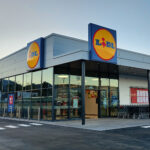
As highlighted by Daniel Ducrocq, Vice President for Western Europe and Head of Retail at NielsenIQ, eight of the twenty retailers in the ranking belong to the discount segment. Lidl appears with its operations in three countries: Italy, Spain, and the United Kingdom, while Aldi is present in Spain and France. Action, Eurospin, and Home Bargains round out the group.
However, the growth in penetration isn't limited to discount stores. Among the twenty retailers that have won over the most households are five specialized operators, including Drug Italia and Acqua & Sapone in the Italian market, Savers and Farmfoods in the United Kingdom, and Grand Frais in France. According to Ducrocq, these results demonstrate how consumers are willing to incorporate new retailers into their purchasing habits when they recognize a particularly competitive or distinctive offering in certain product categories.
The ranking also includes traditional and local retailers, including Grupo Dia, Coopérative U, Intermarché, Marks & Spencer, Conad, and Carrefour Spain. This shows that the ability to attract new customers depends not only on price positioning, but also on the accessibility of stores, product selection, and the ability to meet families' daily needs.
However, gaining new customers is only part of the challenge for European retailers. NielsenIQ highlights that some of the strongest brands have seen a reduction in spending among a portion of their customers. The goal, therefore, is to transform increased penetration into stable sales growth, consolidating purchase frequency and building customer loyalty.