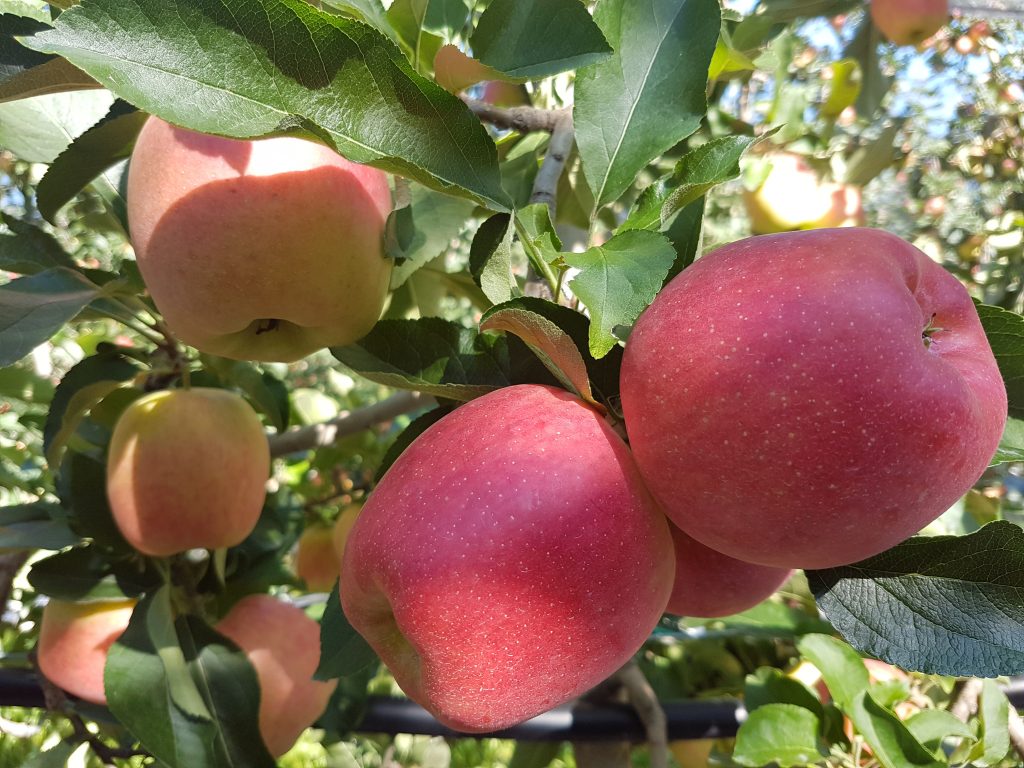
The Italian apple sector remains essentially balanced in the final phase of the marketing campaign, with sales in line with expectations and inventory levels below the historical average for several varieties. This outlines an overall positive picture, albeit one not devoid of critical issues related to the international context. This is what emerged from the meeting of Assomela's Marketing Committee, during which producer members analyzed the last month's performance, highlighting that as of April 1st, the rate of stock depletion is consistent with the plans established at the beginning of the season, with no significant deviations in demand.
Specifically, Golden Delicious apples have stocks of 241.352 tons, down 4,6% from the four-year average and 6% year-over-year. March sales remained essentially in line with last year's levels, confirming the market's strong performance. The Red Delicious apple's performance is even more pronounced, with its lowest stock levels in five years, with volumes halved compared to 2025 and just 14% of production still available in storage, reflecting sustained demand and efficient inventory management.
The Gala apple season is nearing its conclusion, with sales expected to conclude in April, thanks to a 6% increase over the four-year average. Granny Smith apple stocks are also significantly down, down 19,4% compared to last year. Sales of club apples are also continuing as expected, supported by growing production volumes and demand that continues to absorb the quantities released to the market, without creating imbalances.
From a geographical and commercial perspective, Assomela confirms that the direct impact of the crisis in the Middle East has been limited, considering that at the time of the conflict's outbreak, the export season to the affected countries was already well underway. However, in March, there was an increase in quantities destined for the domestic and European markets, as initially expected by operators, helping to maintain the overall balance of the system.
The main concerns, however, arise from the indirect effects of the geopolitical context, with rising raw material and transportation costs beginning to impact farm profitability, exposing fruit growers in particular to growing pressure on margins. In this scenario, the Italian apple growing system demonstrates a good capacity to adapt, especially in terms of logistics and distribution, but concern remains high regarding a possible prolongation of the conflict.
The macroeconomic repercussions, starting with inflation and a potential slowdown in consumption, represent a concrete risk even in the medium to long term, with potential impacts on domestic and foreign demand. For this reason, the Marketing Committee highlights the need for coordinated management throughout the supply chain, with the aim of protecting agricultural income and addressing a scenario characterized by exogenous variables that are difficult to control.
The shared hope remains for a rapid reduction in international tensions, accompanied, however, by greater accountability among industry players, who are required to respond with appropriate tools to an increasingly complex market environment. Assomela, which represents approximately 75% of national apple production through the main producer organizations spread across Trentino-Alto Adige, Piedmont, Emilia-Romagna, Lombardy, and Friuli-Venezia Giulia, thus confirms its position as a privileged observatory for monitoring the sector's evolution.