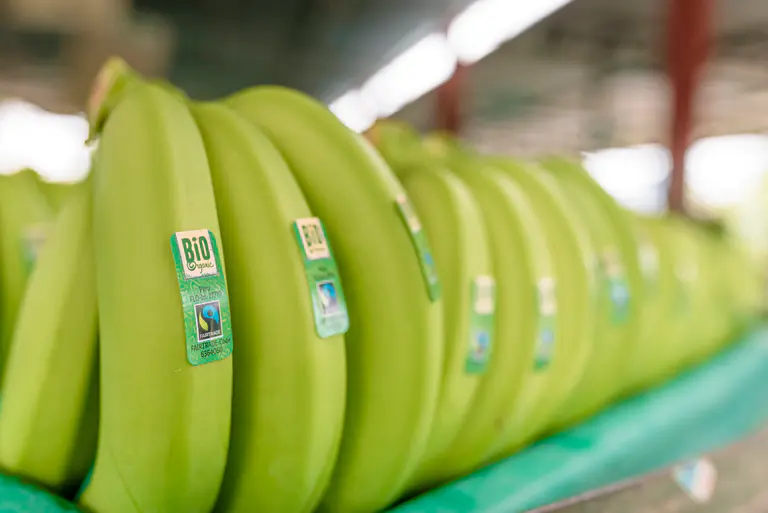
Bananas remain among the cheapest products on supermarket shelves, but the supply chain is increasingly vulnerable to rising costs, the effects of climate change, and crop diseases. The alarm is being raised by the Fairtrade Foundation and Fyffes, among the sector's leading international suppliers, who are calling for prices that support production and greater responsibility sharing along the supply chain.
The British case highlights the gap between consumer prices and pressures on agricultural businesses: according to the two organizations, bananas in the UK are still cheaper than in 1987, despite decades of inflation and rising labor and input costs, and climate adaptation measures. Convenient access for consumers, they warn, risks undermining increasingly fragile economic conditions for those who grow the fruit.
On the eve of Fruit Attraction 2026 in Madrid, Anna Pierides, senior partnerships lead at the Fairtrade Foundation, called on retailers and other supply chain operators to pay fairer prices to producers. The call stems from the overlapping threats facing agricultural companies, often without sufficient resources to absorb the consequences.
Extreme weather events are becoming more frequent and intense, while El Niño brings droughts, floods, and unpredictable seasons. Added to these factors is the spread of diseases like Fusarium TR4, which threatens crops in producing regions. Geopolitical instability also complicates trade routes and contributes to increased fertilizer and transportation costs, along with other operating expenses.
According to Fairtrade, farmers are thus bearing the brunt of crises they did not cause, despite being the supply chain actors least able to shoulder additional costs. The problem also affects employment: banana production supports hundreds of thousands of jobs in Latin America and other growing regions.
For Pierides, this issue directly affects the future of food supplies. If revenues don't cover the true cost of sustainable production, farmers can't adequately finance disease control or the necessary climate adaptation measures. The viability of producers therefore becomes essential to ensuring continuity of supplies.
Fairtrade is also calling for action from the UK government, through a corporate responsibility law that introduces due diligence requirements regarding human rights and the environment. The foundation believes that voluntary initiatives are not enough to correct a system that rewards the lowest price, and compliance costs must be avoided further burdening farmers and workers.
Fyffes agrees, calling for closer collaboration between growers, producers, importers, and distributors to build an economically sustainable model. Commercial Director Frank Burkhardt observes that the industry has absorbed cost increases for years, but this capacity has now reached its limit.
The investments required for climate adaptation, responsible agricultural practices, and worker well-being depend, the company emphasizes, on the profitability of farms and the supply chain. Without adequate economic returns for producers, the future availability of the product is also put at risk.
Meanwhile, Fyffes reports continuing investments in innovation and sustainability, with the goal of sourcing 30% of its produce from regenerative agriculture systems by 2035. This approach, in the message shared with Fairtrade, requires the market to recognize the true cost of banana production and distribution.