

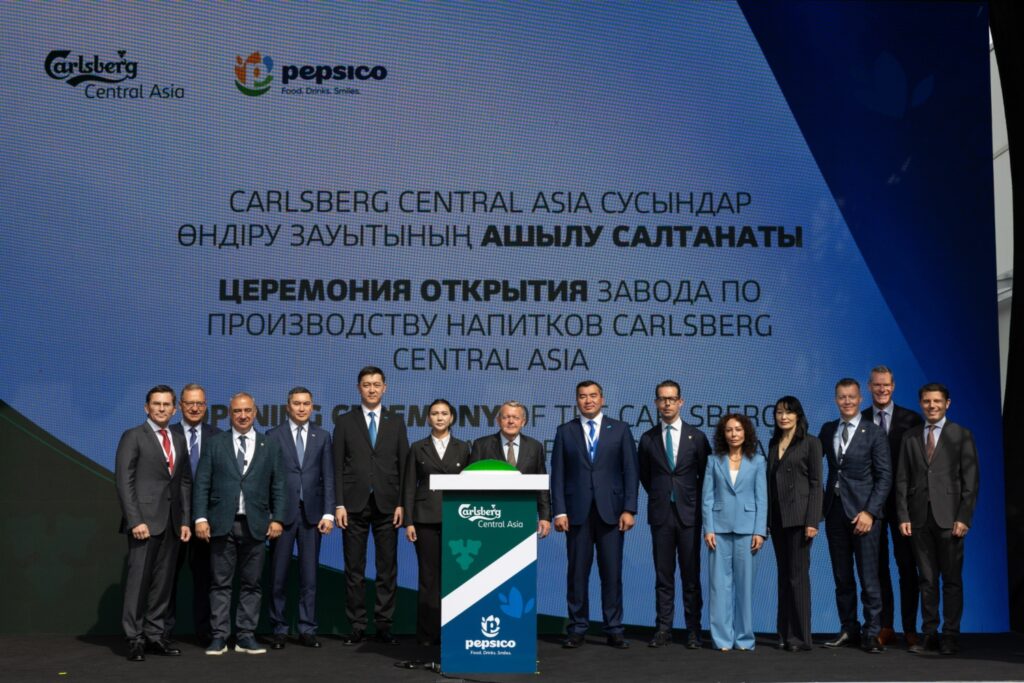
Carlsberg is investing $344 million in Kazakhstan and strengthening its partnership with PepsiCo through a new beverage plant for the local market and Kyrgyzstan. Inaugurated on October 1st in Boraldai, Almaty region, the plant is designed to reach a capacity of approximately one billion liters per year at full capacity, with over 230 direct jobs expected.
The operation represents one of the largest recent investments in the country's food and beverage sector and consolidates Kazakhstan's role as a manufacturing base for Central Asia. The plant will produce PepsiCo branded beverages under license, primarily for Kazakh consumers, alongside supplies to neighboring Kyrgyzstan. The first phase includes five lines, capable of handling various product categories and packaging formats.
The project combines Carlsberg Kazakhstan's industrial investment, operational expertise, and commercial network with PepsiCo's brand portfolio, innovation capabilities, and manufacturing standards. Providing production closer to target markets aims to reduce supply distances and improve responsiveness to demand, building a platform for the development of the two companies' operations in the region.
The expected economic impact extends beyond the plant's workforce to include packaging, transportation, logistics, warehousing, and distribution. A key element is the expansion of purchases from domestic suppliers, which currently account for 71,5% of Carlsberg Kazakhstan's supplies. The company intends to increase this share by increasing the variety and quantity of materials sourced domestically, reducing dependence on imports.
Carlsberg already purchases barley, wheat, aluminum cans, cardboard packaging, and glass bottles from Kazakh suppliers, collaborating with companies in Almaty, Astana, and Shymkent. Expanding its supplier base could therefore support new investments in the agricultural and packaging supply chains, provided the materials meet the quality, safety, and reliability requirements required for beverage production.
Environmentally, the plant integrates technologies for energy saving, heat recovery, waste reduction, and more efficient water management. Water recovery and reuse systems are planned to reduce fresh water requirements, while specific efficiency indicators will be communicated after operational validation. The stated objectives must therefore be reflected in the plant's operating data.
For Carlsberg Group CEO Jacob Aarup-Andersen, the opening marks a significant step in the group's long-term commitment to Kazakhstan and its development in Central Asia. Eugene Willemsen, head of PepsiCo's International Beverages business, emphasized the strategic value of the Kazakh market and the partnership's contribution to local production and supply chain growth.
The new plant is part of a broader investment plan. By 2025, Carlsberg Kazakhstan had paid over 37,5 billion tenge in taxes and mandatory payments. PepsiCo, meanwhile, had announced a $368 million investment in its first snacks plant near Almaty in 2024, which began producing Lay's potato chips this year. This separate project is also intended to develop collaboration with local farmers and increase the supply of domestically grown potatoes.