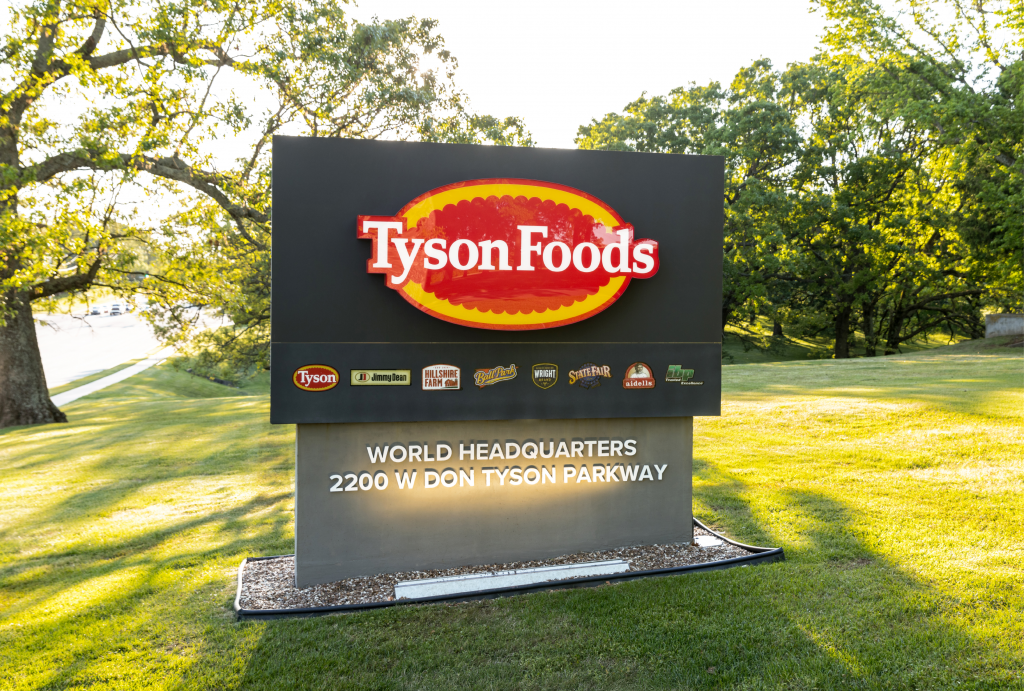
Tyson Foods closed fiscal 2026 with 3,6% growth in revenue, but saw a decline in profitability, primarily impacted by the difficulties in the beef sector. The U.S. food group posted sales of $56,4 billion, compared to $54,4 billion the previous year, while adjusted operating profit decreased 14%, from $2,29 billion to $1,98 billion.
Net income attributable to the company stood at $453 million, compared to $474 million in 2025, while adjusted earnings per share fell 17% to $3,44. Adjusted operating margin decreased from 4,1% to 3,5%. Excluding the additional week in fiscal 2026 and the impact of statutory provisions on sales, revenue growth was 1,1%.
The last quarter was particularly challenging, closing with revenues of $14,58 billion, up 5,2%, but with an operating profit of just $1 million, compared to $158 million in the same period the previous year. Adjusted quarterly operating profit decreased 41% to $361 million, while net income attributable to Tyson fell from a profit of $47 million to a loss of $74 million.
The Beef division, which focuses on beef, weighed most heavily on the company's results, posting an annual operating loss of $1,21 billion, compared to $984 million the previous year. Sales in the segment remained essentially stable at $21,66 billion, despite a 10,6% decline in volume, offset by a 10,2% increase in average prices.
The Chicken segment performed better, reaching $17,56 billion in revenue, up from $16,84 billion in 2025, with an operating profit of $1,75 billion. Processed foods also performed well, with sales rising from $9,93 billion to $10,49 billion and an operating profit of $1,33 billion. The Pork segment, on the other hand, reported an operating profit of $137 million, after a loss of $141 million the previous year.
“Our fiscal 2026 results reflect the strength of our diversified protein model and our commitment to our customers and consumers,” said Jeff Schomburger, chairman and CEO of Tyson Foods, emphasizing the company’s commitment to continuing to invest in its brands, innovation, and operational capabilities.
On the financial front, the group generated operating cash flow of $2,43 billion, reducing overall debt by $1,08 billion and closing the year with available liquidity of $4,1 billion.
For 2027, Tyson Foods expects sales to decline by between 3,5% and 5,5%, primarily due to lower cattle availability and the reorganization of its production network. Adjusted operating profit is expected to be between $1,7 billion and $2,15 billion, while planned capital expenditures will be between $1,1 billion and $1,4 billion. The group also announced a 2% increase in its annual dividend for the new fiscal year.