

Salted for those familiar with and seeking traditional products, desalted for those seeking convenience, and new cod species to broaden the price range. Unifrigo Gadus is developing a more comprehensive assortment to meet changing consumer trends.
The cod market is struggling with a more expensive raw material. European data confirms significant price increases for salted cod in recent years, while international supply remains under pressure.
Part of this tension already arises upstream. The cod used for cod comes from wild catches, and quotas are kept at levels compatible with stock protection. This means fishing less to preserve the resource, with an inevitable impact on the availability of raw materials and therefore on prices.
Added to this is a shift in the product's destination. In the past, salted cod was one of its main markets. Today, the same raw material is also in demand for fresh and frozen products, where, for example, interest in lightly salted Nordic cod is growing. Demand therefore remains strong, but the available supply is being split across multiple channels and processing methods.
Rising prices are a factor that industry and distribution must contend with. However, it doesn't seem to have dampened interest in the product. Even broader seafood data points to a still-dynamic market. In the first half of 2025, according to ISMEA, domestic purchases of fresh fish increased by 3,2% in volume, despite average prices rising by 6,2%.
However, the stability of cod demand increasingly depends on how supply is constructed. Unifrigo Gadus is working on this front, starting from a very concrete fact: cod consumers are no longer just one.
Salted and desalted speak to different consumers
Salted cod retains a highly recognizable audience. They're familiar with the product, know how to treat it, and continue to seek it out in its most traditional form. For other consumers, however, soaking and desalting represent an extra step. Not necessarily an absolute obstacle, but certainly a factor that makes the product less immediately accessible compared to other seafood options.
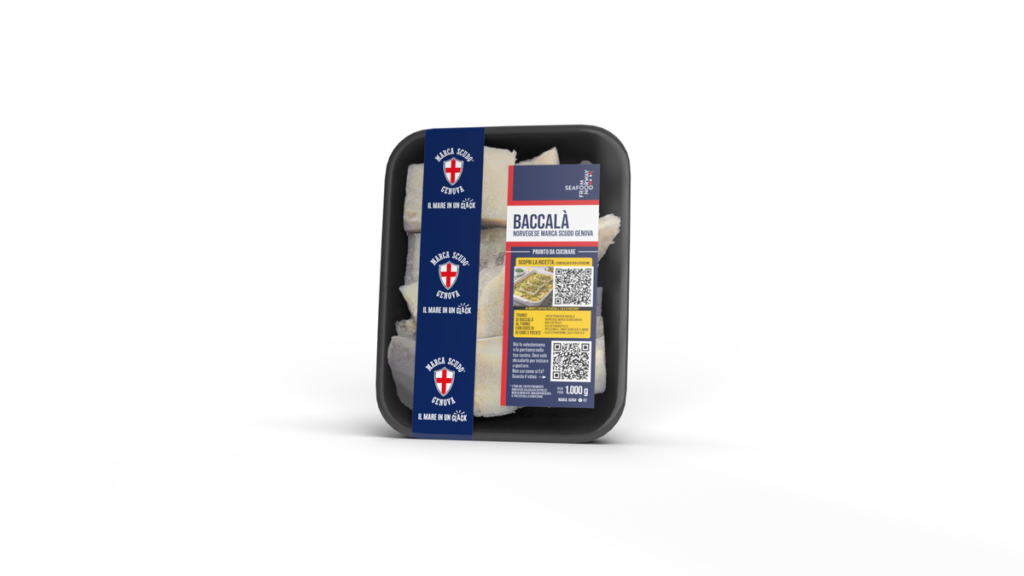
Unifrigo Gadus is therefore working on two proposals that meet different needs. On the more traditional front, one of the most recent projects is the 1 kg Salted Cod with Spine, developed in co-marketing with Seafood From NorwayThe project emphasizes the value of Norwegian origin, placing the provenance of the raw material and the connection between cod, the region, and fishing culture at the center of the communication. The collaboration is part of a broader project with the Seafood From Norway brand, dedicated specifically to the story of Norwegian cod.
Alongside savory products, there are also pre-desalted and ready-to-cook products. In supplying large-scale retail outlets, Unifrigo Gadus notes that the coexistence of the two types allows for better coverage of demand. Savory products continue to dominate traditional consumption, while desalted products appeal to those seeking a simpler product to incorporate into their daily routine. The difference isn't just in size; it's also in the way the product fits into the shopping cart.
Regular consumers continue to recognize salted cod as the product they've always known. Those with less time or less experience with preparation can approach the category through a ready-to-cook product.
Desalting takes cod out of the sole logic of recurrence
Cod remains deeply tied to tradition and, in many parts of the country, to festive occasions. This is a strength, but it can also become a limitation when consumption is limited to just a few times of the year.
Desalting cod helps change this perception thanks to several advantages: it reduces preparation time, simplifies home use, and makes the product more suitable for weekday consumption. This allows cod to be purchased more similarly to other ready-to-cook fish products.
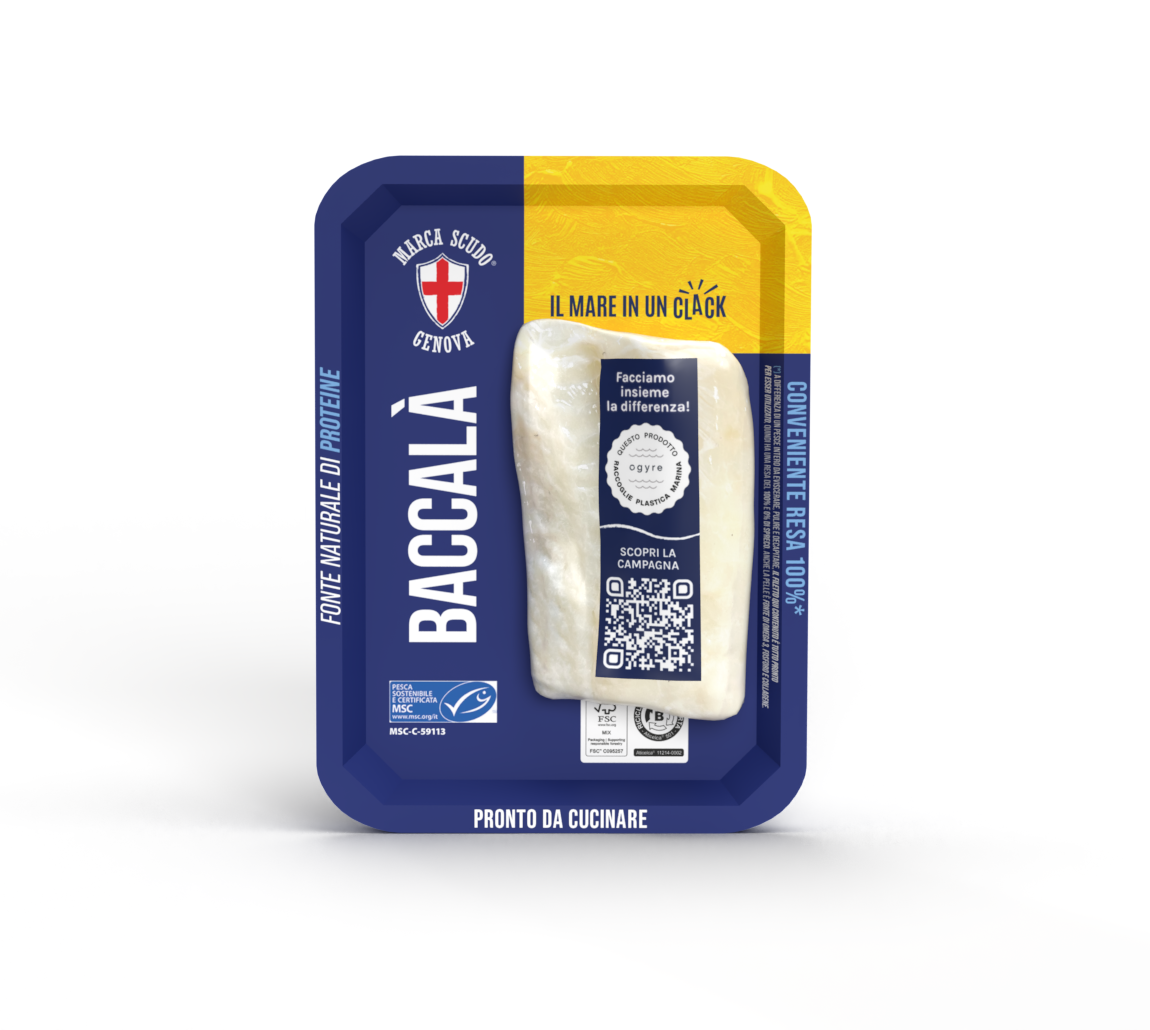
An example is the Ready-to-cook desalted cod heart, a project that Unifrigo Gadus has linked to the partnership with Ogyre, a platform committed to Fishing for Litter activities. Through this collaboration, the company supports marine litter collection operations carried out with the involvement of fishing communities.
In this case, the product combines two aspects that are gaining importance in large-scale retail trade: service, because the cod reaches consumers already desalted and ready to be cooked, and an environmental project directly linked to the sea and the fishing industry.
For large-scale retail trade, this means being able to work on the category with greater continuity, without relying solely on seasonality.
Unifrigo Gadus is building part of its offering on this distinction, maintaining the more traditional product and adding a version capable of capturing different consumer habits.
Higher prices, wider assortments
Rising prices, however, raise another question. While the price increase reflects a wild-caught raw material managed through smaller fishing quotas, consumers continue to face a higher final price. Some consumers may continue to purchase cod even at higher prices. Others, especially those in more sensitive spending brackets, may reduce their purchase frequency or even abandon it altogether.
For this reason, Unifrigo Gadus's assortment is expanding to include other cod species, particularly ling cod and, to a lesser extent, brosme cod. These products are different from cod and must be presented as such. However, their inclusion allows for a broader price range.
Cod maintains its position; ling and brosme can offer an alternative to those who wish to remain in the cod category, but at a more affordable price. This changes the assortment logic for buyers. Where previously a single product was expected to meet the majority of demand, today the offering is structured across multiple levels: different species, different serving sizes, and different consumption occasions.
A less uniform category
The category is becoming increasingly diverse. Some people seek salted cod and want no alternative, while others prefer to buy it already desalted. And then there's a segment of consumers who continue to appreciate this family of products, but must contend with a higher spending level.
Unifrigo Gadus's offering reflects this diversity: savory products continue to focus on tradition and origin, as in the project with Seafood From Norway; desalted products expand accessibility and can also be linked to environmental sustainability initiatives, as in the partnership with Ogyre; ling and brosme, on the other hand, allow for a different price range. Meanwhile, the upstream environment has also become more complex. Raw materials are less abundant, are managed more carefully, and must now satisfy more markets than in the past, from savory to fresh to frozen.
Price pressure remains and will continue to impact purchasing decisions. But interest in cod doesn't seem to be waning. What's changing, above all, is the way that demand is captured, with products now differing in preparation, serving size, origin, and price range.