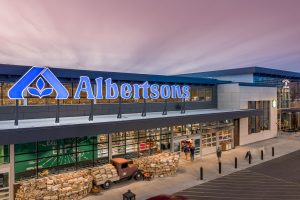


Albertsons Companies closed the second quarter of fiscal 2026 with essentially flat revenues, sharply declining profits, and declining comparable sales, announcing a comprehensive review of its operations to regain competitiveness and improve profitability. For the twelve weeks ended September 12, the U.S. grocery retailer reported revenue of $18,89 billion, down 0,1% from $18,92 billion in the same period the previous year, while comparable sales decreased 0,8%.
Profitability deteriorated more markedly, with net income falling from $168,5 million to $51,5 million, a 69,4% decrease, and earnings per share falling from $0,30 to $0,11. Adjusted net income stood at $179 million, compared to $248,4 million in the second quarter of 2025, while adjusted EBITDA decreased from $848,4 million to $784 million, with the EBITDA margin falling from 4,5% to 4,1%.
The pharmaceuticals segment and digital sales, the latter growing 11%, were the main drivers of business, while higher fuel sales partially offset the weakness in comparable sales. Gross margin fell from 27% to 26,8%, impacted by higher delivery and handling costs related to the growth of e-commerce and increased inventory losses. Selling and administrative expenses reached 25,6% of revenue, compared to 25,4% the previous year.
Faced with these results, CEO Susan Morris announced the launch of a strategic review of the entire group, emphasizing that the quarter's performance, while in line with updated expectations, does not reflect Albertsons' true potential. The goal is to simplify the organization, speed up decision-making, reduce a cost structure deemed unsustainable, and allocate part of the savings to initiatives capable of offering greater value to customers.
The program is part of the ACI Edge reorganization process, presented in July, which has already included the consolidation of the eleven operating divisions into four regions and the centralization of commercial activities related to products in the supermarkets' central departments. The review will also include commercial strategy, brands, markets served, company assets, and investment priorities. Pending completion of this analysis, Albertsons has decided to suspend its 2026 financial forecasts, postponing the presentation of a new turnaround plan until the fourth-quarter earnings announcement. An investor meeting is scheduled for spring 2027.
Further complicating the situation is the dispute with Kroger, from which Albertsons is seeking over $9,3 billion in damages for the failure of the $24,6 billion merger, which stalled in December 2024 following the intervention of U.S. antitrust authorities. The legal proceedings, with a scheduled two-week hearing, are expected to begin in October. Albertsons accuses Kroger of failing to fulfill its contractual obligations to obtain authorization for the transaction, particularly regarding its willingness to modify its supermarket divestment plan. The claim also includes a contractual penalty of $600 million and $75 million in costs, in addition to other sums claimed and interest.
Kroger denies the allegations and disputes any financial liability, arguing that regulatory approval would not have been possible without exceeding the agreed-upon limit of 650 stores to be divested. The group also claims to have invested over $1 billion in attempting to complete the acquisition and accuses Albertsons of colluding with C&S Wholesale Grocers, identified as the buyer of some of the stores, to push for further divestments. The controversy is already impacting Albertsons's financials, which in the second quarter recorded costs related to the failed merger of $35,3 million, compared to $19 million the previous year.
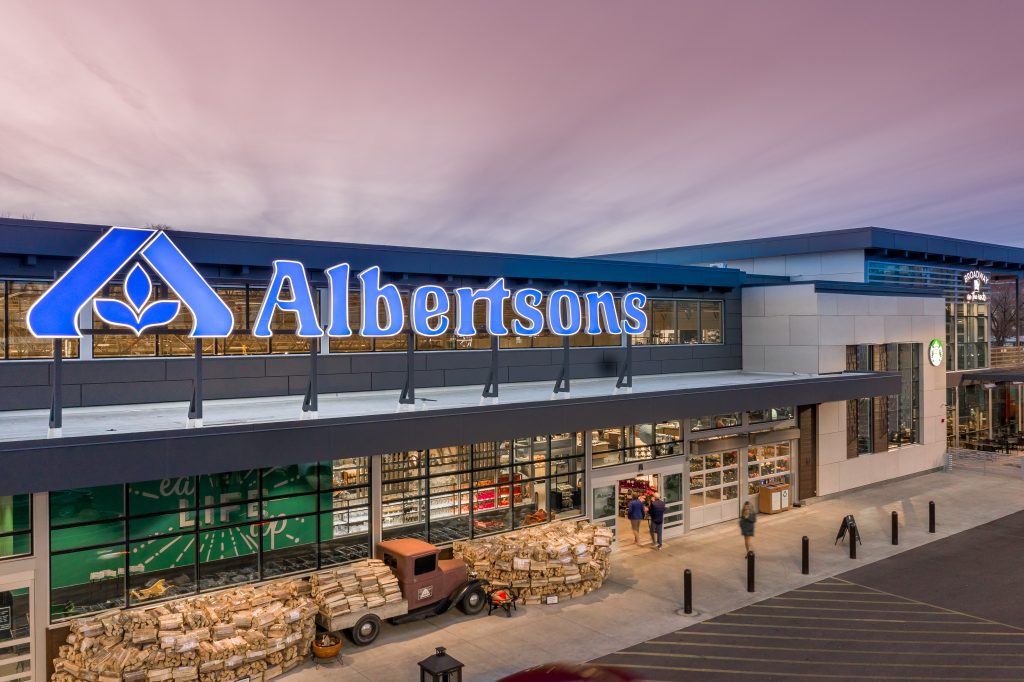
On the investment front, in the first 28 weeks of the fiscal year, the group allocated approximately $900 million, primarily to the renovation of 38 stores, the opening of seven new stores, and the strengthening of its technology and digital platforms. Albertsons currently operates 2.240 stores in the United States, through 22 brands including Safeway, Vons, and Jewel-Osco, as well as 1.709 in-store pharmacies, 408 fuel stations, 22 distribution centers, and 19 manufacturing plants. The challenge now will be to regain profitability and competitiveness in an increasingly complex market, while a multi-billion dollar legal battle with one of the main competitors in the American retail sector remains ongoing.
WANT TO PARTICIPATE IN THE FORUM WITH YOUR TEAM?
GDONews Retail Intelligence Forum 2026 entrance passes are now available!