


In six years, the brands of the distributor in Ecuador went from 55 to 121. All and B-Yes buy medium prices for less than one dollar and are obliged to do so every daya to rethink the relationship between price and quality
According to Worldpanel data by Numerator, the number of proprietary brands in the modern Ecuadorian channel increased from 55 in 2019 to 121 in the first half of 2026. In the 12 months to June 2026, private brands increased by 8%, premium brands by 3% and mainstream brands by 2%, while the economy brands cost 2%.
The analysis was carried out by the Food Retail Italia group, a company that operates in the Latin American markets as a bridge between Italian industrial production and the Latin American retail mass market. For us to follow the line on both sides of the Atlantic, the Ecuadorian data is a clear signal of where consumption is going in the region.
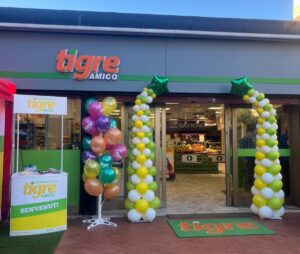
Los prices hablan solos (Ecuador está dolarizado). The average price per unit is US$0,89 in discount stores, US$1,01 in neighborhood stores, US$1,50 in supermarkets and US$1,68 in hypermarkets. Compared to the leading brand, your own brand offers a discount of 20% to 40%. The engine of the exchange are the discount formats: Tuti, from Grupo El Rosado, born in 2019, has 960 locations in the country, and B-Sí, from Corporación Favorita, launched in 2026, which counts with 25 stores in Pichincha.
The economic analyst Jorge Calderón advises on a risk: “A cheap product can simply convey the perception of bad quality”. For example, the Ecuadorian consumer seeks price, “even at the same time he seeks quality”.
Ecuador is not an isolated case. The same owner can be found with D1 and Ara in Colombia, with Tiendas 3B in Mexico and with Mass in Peru: the nearby discount store brings its brand to the center of the street. For six years of food inflation, the consumer who prefers his own brand and who is satisfied returns to buy it. Competence does not depend only on price, but on quality at a low price.