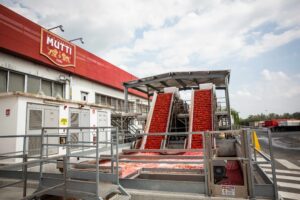


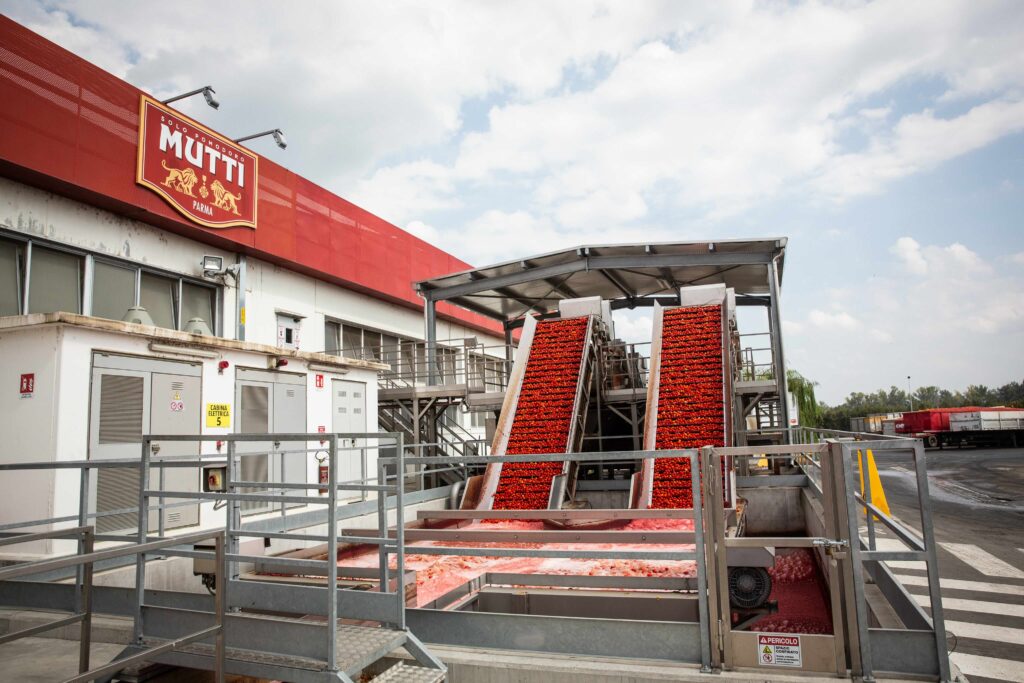
Mutti closed the 2026 tomato season with 775 tons of processed raw material, in a season marked by extreme heat, hailstorms, and lower-than-average crop yields for the past five years. The volume processed exceeded 725 tons in 2025, an increase of approximately 6,9%, while the year's results highlight the challenges facing the agri-food sector in the face of growing climate instability.
Harvesting and processing began around the first week of July, marking the group's earliest start ever. This advance was due to accelerated ripening due to the heat, which required the plants to open earlier to meet farmers' supply needs.
Exceptionally high temperatures and violent hailstorms compromised plant growth, especially in Northern Italy, where yields per hectare fell below the five-year average. The second half of the summer also saw a significant drop in Brix levels, a parameter that measures the soluble solids content of tomatoes and is important for industrial processing.
"From an agronomic perspective, the 2026 season confirmed that the climate crisis presents us with unknown scenarios for which we are not yet fully prepared," said Massimo Perboni, Director of Agricultural Services at Mutti. According to the company, collaboration with producers and the flexibility of its facilities have allowed it to maintain operational continuity and the quality standards of the final product.
Southern Italy demonstrated greater production resilience, with particularly positive quality results for peeled tomatoes. This regional disparity characterized a complex season, during which agronomic anomalies emerged, which the group identified as areas requiring attention for the entire sector.
Alongside the weather, the season highlighted the need for better coordination of cultivated areas and the industry's absorption capacity. At the start of the campaign, the vast expanse of national crops had highlighted the risk of supply exceeding the volumes that processing plants could handle.
The subsequent decline in yields compared to forecasts has gradually reduced this imbalance, helping to rebalance overall quantities. This outcome, however, highlights the need for more precise planning, without leaving volume management to the consequences of weather events.
Mutti has confirmed its reward system for its agricultural partners, from the Quality Award to the Pomodorino d'Oro, along with incentives for early-harvest production. These tools are intended to support the quality of raw materials and the continuity of supply chain relationships.
For CEO Francesco Mutti, the industrial result does not diminish the urgency of addressing the vulnerability of the agricultural system, starting with water availability. The progressive disappearance of glaciers and snowfields, he observes, exposes the Po Valley to increasingly dry summers, with consequences that extend beyond tomato production.
"We can no longer rely on external factors, nor can we wait for disaster to strike before acting," the CEO stated. "Mutti will continue to do its part by investing in quality and value for its partners, but without immediate infrastructure interventions and responsible planning, the entire Made in Italy industry is at systemic risk." The recently concluded season has seen an increase in processed volumes, but also provides guidance for the future of the supply chain: strengthening water infrastructure and production coordination is essential to address increasingly unpredictable seasons.