

The UK meat retail market is experiencing different dynamics for beef, lamb, and pork, with a common factor being inflationary pressure, which continues to impact household purchasing decisions. In the beef sector, according to data released by AHDB, spending increased by 8,8% over the past 12 weeks, supported by an average price increase of 16,4%. This, however, led to a 6,5% decline in volumes, indicating under-pressure demand.
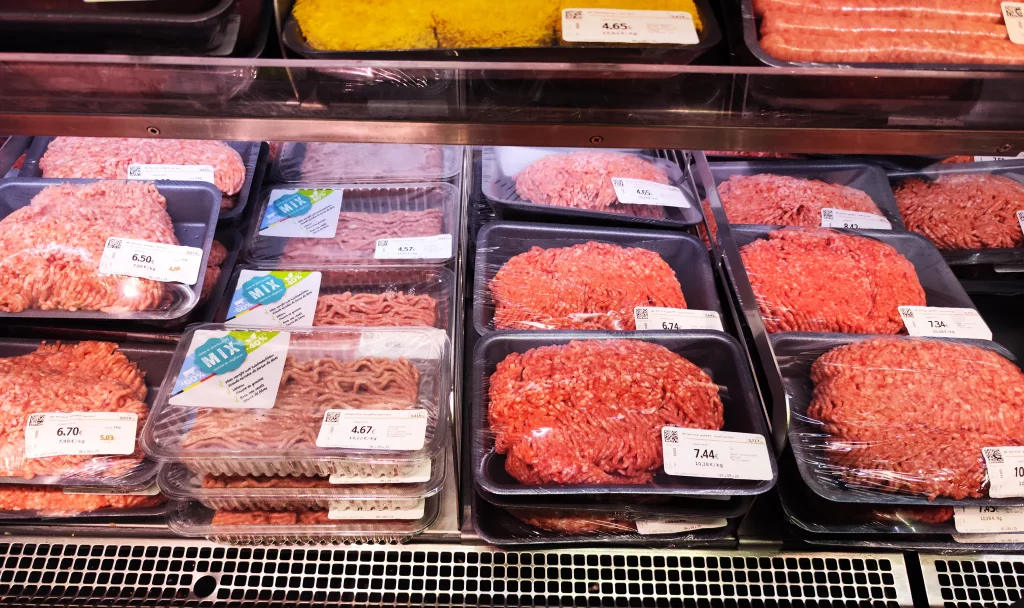
Specifically, primary beef cuts saw a 9,1% decline in volume, with a decline across all categories. Ground beef saw the most significant decline in absolute terms (-2.988 tons), equal to an 8,2% year-over-year decline, due to an average price increase of 27,3%, which reduced both the number of buyers and volumes per purchase. The processed beef segment also declined, recording a 6,8% decline in volume, driven by a decline in burgers and grilled products (-7,7%), where the number of buyers was also declining.
The value-added segment proved more resilient, limiting the decline to -0,6%, with sous vide bucking the trend (+1,9%) thanks to higher volumes per purchase, which, however, failed to offset the decline in ready-to-cook and marinated products. In the sheep sector, the picture appears less critical: volumes fell by 1,7%, while spending grew by 9,2%, supported by an 11% increase in average prices, confirming relatively more stable demand compared to beef.
Lamb cuts recorded a 1,9% decrease in volume, but with some positive exceptions, such as roast legs, which grew by 4,9% (+114 tons), thanks to both an increase in buyers and volumes per purchase. Processed lamb recorded a 1,8% decrease in volume, penalized primarily by grilled products, while the value-added segment grew by 0,9%, driven in particular by marinated products (+9,9%).
The pork sector showed a more complex and resilient trend: overall volumes decreased by 2,3%, with a 0,6% decrease in spending and a modest increase in prices (+1,7%). Primary pork cuts grew by 1,1% in volume, with good performances for roast products (+2,2%), supported by an increase in volumes per purchase.
The growth in minced pork was particularly notable, rising 39,3% (+1.644 tons), thanks to both an increase in both the number of buyers and the frequency of purchase, indicating a shift toward more affordable options. Conversely, the processed pork segment declined 4,3%, despite the growth in gammon (+8,6%), which failed to offset the declines in other categories.
The value-added segment, on the other hand, performed decidedly positively, recording a 16,8% increase in volumes, driven by sous vide (+22,2%) and especially ready-to-cook products (+40,4%), supported by greater penetration and higher volumes per purchase. Overall, inflation continues to reshape household purchasing choices, penalizing more expensive proteins like beef and favoring more accessible categories and high-service solutions, in line with a growing quest for convenience and affordability.