


How capable are we of living in the present? This is a question that deeply touches each of us, and if we ask ourselves this question in a period in which everything is used and thrown away in a matter of days (information, political scenarios, industrial strategies, etc.) we certainly have a lot to think about. When we analysts examine market data and tell current numbers trying to predict future scenarios, our mind does not always dwell on the less recent past, since market changes are fast and sudden, as demonstrated in the last 20 years, despite an economic stagnation that has characterized us for a long period.
However, analyzing some performance indices of large companies (TOP 6 ITALY) over a ten-year period (2014-2023), interesting considerations emerge. In this article I will tell you about the examination that we in GDONews have recently carried out on the first six retailers by size of the Italian large-scale retail trade, understood as individual company names, to share some considerations with you.
Premise: this top 6 does not include Eurospin, the leader of the discount market, since the company operates “on the field” with five company names, and this does not detail some aspects taken into consideration in this article.
Who are the top six retailers by turnover in terms of company names in Italy?
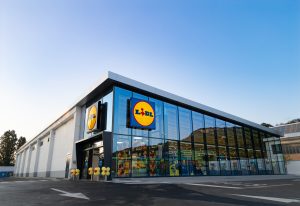
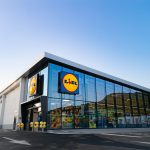
The first is Esselunga, which in 2023 exceeded 9 billion euros. The second would be Eurospin if it had a single company name, but instead we find Lidl, which in the balance sheet filed in February 2023 recorded a turnover of almost 6,7 billion euros. The third is PAC 2000 with 3,9 billion euros, followed by Coop Alleanza 3.0 with almost 3,9 billion. The fifth is the GS group, part of Carrefour Italia, with 3,8 billion euros, and the sixth is MD SPA, with almost 3,6 billion.

Some considerations already emerge from this ranking. In the first six there are two (and could be three) discounters, which represents a significant element of novelty. Furthermore, Coop, in particular its leading company in terms of turnover, which loses positions in favor of a partner Conad, the current market leader.
A further consideration concerns the decline in GS revenues, the result of strategies aimed at cost optimization, as already illustrated in a recent article on GDONews. Finally, it is important to note that MD's turnover reported in the balance sheet includes sales (b2b) to affiliates, but not those of the affiliates themselves, and in any case it is steadily in the most honorable part of the market.
This brings their total revenues to around €31 billion, equal to 26% of the national market share, signalling a growing concentration of the Italian mass retail market.
A second indicator associated with revenue is their cumulative profit, that is, how much profit margin has been accumulated over the period 2014-2023.

Here too, significant data emerge: Esselunga is the leading company in terms of cumulative profits over the last decade, with Eurospin not being included in the analysis. In second place is Lidl, with 1.295 million euros, followed by PAC 2000 with 496,6 million, MD with 438,6 million, while Coop Alleanza 3.0 recorded a deficit of 758 million, and GS SPA a deficit of 1,8 billion.
This panorama highlights how the two companies with still negative balance sheets are affected by the weight of the hypermarket channel. And if a few years ago the term losses was associated with the hypermarket format, today, with virtuous examples such as Tosano and Finiper, this statement could be revised. However, Coop and GS have not yet found a way to make these structures profitable.
A final interesting aspect is the possibility of dividing the ten-year period into two five-year phases. In the period 2014-2023, Esselunga increased its revenues by 30%, with an increase of 10% in the first five-year period (2014-2018) and 14% in the second (2019-2023). However, the growth of the national market in the second five-year period was exponential compared to the first five years, and the 14% figure is not so striking when compared to the general growth. Confirming this are the results of the EBITDA, which actually grew by 28% in the decade, from 482,4 million to 618,7 million. But while in the first five-year period it increased by 23%, in the second it decreased by -12%.

Furthermore, Esselunga's assets, which went from 2 billion and 45 million in 2014 to 2,2 billion in 2023, showed an increase of 8%. However, in the first five years, the assets had increased from 2 billion and 45 million to 3 billion, while in the second it decreased from 3 billion and 116 million to 2 billion and 2, recording a -29%. This data indicates a change in progress that the market must consider.
Lidl, on the other hand, saw its revenues grow by 120% in ten years, with an increase of 42% in both the first and second five-year periods. The above reasoning must be applied to this absolutely equal growth between the two five-year periods.
And in fact, Lidl's EBITDA, which went from 134,3 million to 546 million, thus growing by 307% over a decade, was obtained with an increase of 142% in the first five years and 66% in the second. Even the assets, which went from 283,3 million to 1,708 billion, recorded a growth of 503% in the decade, but with an increase of 130% in the first five years and 120% in the second, that is, in a much more favorable period.
What does this mean? That, although the numbers continue to grow, the market saturation is evident.
As Cavalier Podini, MD patron, recently stated, “We are condemned to open new stores,” but this “condemnation” is reflected in the balance sheets, where some operators are starting to tremble; others, however, although solid, see the quality developed in the past eroded.